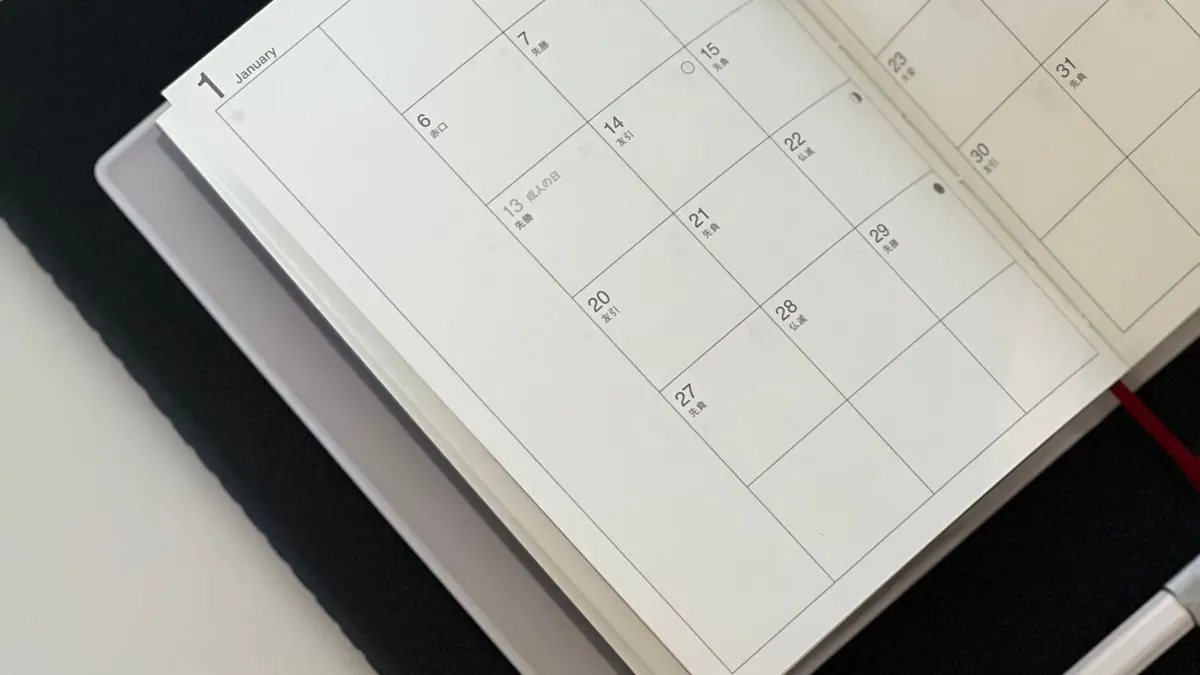
The short answer: a year has 52 full weeks plus one extra day, or two extra days in a leap year. The longer answer matters only if you use numbered weeks, like “week 12,” at work or school. This guide covers both.
The simple math
| Common year | Leap year | |
|---|---|---|
| Days in the year | 365 | 366 |
| 52 weeks × 7 days | 364 | 364 |
| Days left over | 1 | 2 |
So no year divides evenly into weeks. Those one or two leftover days are why a date falls on a different weekday each year. October 1 was a Wednesday in 2025 and is a Thursday in 2026.
What a numbered week is
Some workplaces and countries number the weeks of the year: week 1, week 2, and so on. The most widely used system is the ISO week date, from the international standard ISO 8601. It uses two simple rules:
- Every week runs Monday to Sunday.
- Week 1 is the week that contains the first Thursday of the year.
Because of the second rule, week numbers belong to an ISO week-year, which can start a few days before or after January 1. The days at the edges of the calendar year can carry the previous or next year's week number.
A real example: the turn of 2026 into 2027
| Date | Weekday | ISO week label |
|---|---|---|
| December 28, 2026 | Monday | 2026, week 53 (starts) |
| December 31, 2026 | Thursday | 2026, week 53 |
| January 1, 2027 | Friday | 2026, week 53 |
| January 3, 2027 | Sunday | 2026, week 53 (ends) |
| January 4, 2027 | Monday | 2027, week 1 (starts) |
January 1, 2027 belongs to ISO 2026, week 53, because that Monday-to-Sunday week contains Thursday, December 31, 2026, not the first Thursday of 2027. The first Thursday of 2027 is January 7, so week 1 of 2027 is the week of Monday, January 4. Weeks do cross calendar years; that is completely normal in this system.
Why some years have week 53
Usually the leftover day or two are absorbed by neighboring weeks. But in some years the timing gives the ISO week-year 53 week labels instead of 52. That does not mean the calendar year has 371 days. The Gregorian year, the ordinary calendar, still has 365 or 366 days; the 53 labels simply include a few days borrowed from the edge of the next or previous calendar year. 2026 has 53 ISO weeks; 2027 has 52.
Not everyone uses ISO
Some calendars and apps count weeks differently, for example starting on Sunday and calling the week containing January 1 “week 1.” The same date can then have a different number. When week numbers matter, confirm which system the other person uses.
Check any date
The week number calculator shows the ISO week for any date. It reports the week number only, so for dates in the first or last few days of a year, remember the label may belong to the neighboring ISO year.
Find the week number for a dateMatching a printed calendar
If you plan in numbered weeks, choose a Monday start in the calendar maker, so each printed row matches an ISO week.
Make a Monday-start calendar